
Thursday, September 30, 2010
Collage now... Wait til later

Wednesday, September 29, 2010
Scanning pen
http://www.stumbleupon.com/su/AkqAp1/dornob.com/creative-scan-and-draw-color-changing-pen-design/
What is they had one of these that worked straight to the computer?!
What is they had one of these that worked straight to the computer?!
Thursday, September 16, 2010


New Media Art
The reading for today explores the in-depth development of new media art, starting with the beginning of the internet, also known as the "dot com boom." It moves through the advancement of digital art, mostly focusing on the realm of internet art. The internet, although we take advantage of it and rely upon it heavily today, was a new concept for many different people during its emergence. For entrepreneurs, it meant a new venue for sale; for media sources, it was another outlet, etc. For artists, it quickly became a way to share images and works and made remixing works even easier. An artist could easily find a well-known image from decades before and mix it into his work, creating something new while incorporating something from art's history. The internet also made the inclusion of sound and video possible.
One artist I found in the reading that I wanted to learn more about was McKenzie Wark. He is the author of "A Hacker Manifesto" and several other books and has completely changed today's view of "hacking." Hacking, by his definition, is knowing and understanding computers - having programming as a hobby and believing in the sharing of information with many people. Hacking is really just "getting a computer to do anything." This is not the traditional view of a hacker, but the understood definition within the hacking world. (Tribe) Wark continues on and includes other domains in his definition. He says, "Whatever code we hack, be it programming language, poetic language, math or music, curves or colourings, we create the possibility of new things entering the world.... In art, in science, in philosophy and culture, in any production of knowledge where data can be gathered, where information can be extracted from it, and where in that information new possibilities for the world are produced, there are hackers hacking the new out of the old" (Tribe).
While Wark, as an artist fascinates me, I could not find many visual works that he had done. He most compares and theorizes about hacking and its ultimate relation to art and the rest of the world. His main goal is to enlighten people about the true nature of hacking and to change the name that many perceive it having. For my visual artist, I picked Cornelia Sollfrank. She is know for her hacktivism (Tribe) which combines art, hacking and political activism. She has written about cultural development through hacking and worked on creating a program that mixes images from different sites, making new artworks in the process. She believes that sexism runs rampant in the art world and, through her hacking, tested her theory. Tribe says, "To expose the sexism that she believes pervades contemporary curatorial practices, she then submitted ... 200 works to an international Net art competition under false female names, thus ensuring that a majority of the entrants were women. When the jury announced the three winners, all of whom were men, Sollfrank revealed her intervention."
Although Sollfrank's specialty is not visual arts, per se, she is an artist, nonetheless and is inspiring women and revealing sexism in the art world today. She exemplifies how the internet makes a grassroots movement through the internet possible. My only critique of her work would be the scope. If not for this class, I would not have heard of her or her work. In my opinion, she raises several valid points about sexism in the digital art world and her work needs to reach a wider audience.
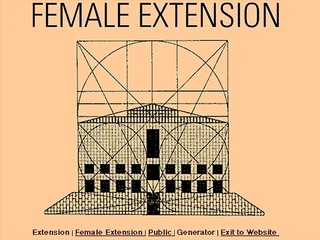
https://wiki.brown.edu/confluence/display/MarkTribe/New+Media+Art+-+Introduction
http://subsol.c3.hu/subsol_2/contributors0/warkbio.html
http://en.wikipedia.org/wiki/Cornelia_Sollfrank
http://www.medienkunstnetz.de/artist/sollfrank/biography/
http://www.artandresearch.org.uk/v2n2/sollfrank.html
Due to the nature of my artist, there are not any photographs or images to post on this blog besides the one shown above.
Tuesday, September 14, 2010
MY Collage
version one

version two

Chaos.
I made several layers (sometimes merging them in order to clean up my layers window) using the lace, scarf, friendship bracelets, keys from the keyboard, beads and the tree from the OAR cover. I also used the heart pendent. Using blending and opacity, I combined all of the images to create a surrealistic commentary on randomness, etc. While the colors are not exactly clashing, there are many different textures and concepts all merging in this composition.
Thursday, September 9, 2010

Wednesday, September 8, 2010
Scanner Trials


Tuesday, September 7, 2010
Class Sketch; A Study on Pixelation

This is a quick, in-class sketch done in Photoshop. We were forced to stay within the bounds of layers and colors. Each color had to be on a different layer, regardless of shade, etc. It was difficult as I was very very tempted to use opacity, blur and other Photoshop tools! The point of this assignment, however, was to gain an appreciation for the relative simplistic elements of some pictures. You can do a lot with just a little...
Monday, September 6, 2010
Oliver Wasow: Digital Art and Photography


This week we read about and discussed the beginnings of digital art, going back all the way to the room-sized computers. "New media art," as discussed by Christiane Paul in her introduction, is ever-changing and very dynamic. The piece that we read for class follows the progression of technology and its direct relation to art. The assignment was to choose an artist, presented in the reading, and provide specific information in relation to their work and the processes behind their art. I chose Oliver Wasow's work because his exploration of hyper-realism struck me as interesting and something akin to what I would like to explore one day.
Oliver Wasow's website is set up to display his works digitally. He has them arranged by time period and setting. Wasow's biography is a list of the shows he has been in and offers no insight into his philosophy or process behind his finished photos. However, I feel that Christiane Paul offers excellent insight into photo manipulation when she explains, on page 43, that photo manipulation can break down the connection between the viewer, nature and its specific representation in the photo. Wasow’s work creates a sense of fantasy. His shots and manipulation are of recognizable places but he adds a surreal twist to each picture.
According to "http://members.cox.net/smallworks/wasowbio.html," Oliver Wasow received a Bachelor of Arts degree from Hunter College in 1982. Much as we learned in class this past Thursday, Wasow uses various computer programs to collage photos to make "a photographic archive of the man-made and the natural, of past and future, of tranquility and disaster"4.
This view of Wasow's work accurately describes how I feel about his pieces. His earlier works are more abstract in feel, with blocks of color and experimentations with light being the main focus. As his portfolio matures, one can see a distinct shift in his artistic view. He starts to include more recognizable forms and plays with the idea of hyper-realism as discussed by Paul in the reading. His works, such as Paris and Spring Green, Wisconsin, pull the viewer in through a juxtaposition of reality and disaster. I feel that Wasow could be commenting on the inseparable sides of life, how disaster and reality co-exist and cannot be separated. Wasow could also be commenting on the dynamism of life and how it can change so quickly. With such drastic extremes shown in his work, it could easily be showing how scenes and life change without expectation, much like how one's eye travels across a painting or a picture.
Wasow's work is very successful in conveying a sense of chaos within the calm. His work is vibrant and eye-catching. Perhaps I am bias in my evaluation, as I love works such as his, but I feel that his work could not be improved upon, individually. However, looking at his collection as a whole, I kind of wish that some of his works were a little more subtle . I think it would be interesting to explore chaos and juxtaposition in a more subdued way. All of his works are very obviously representing opposites. I am not saying that there is a problem with his works, only that I think it would be interesting to see him explore that avenue of thought.
My uncle is a photographer and has done some work similar to Wasow’s. One takes the extremes of both the lowlights and the highlights and combines them (in photoshop) to create a kind of hyper-reality. The method is known as HDR, or high dynamic range imaging, creates a surrealistic effect. I am not exactly sure of the method that Wasow used to create his works, but I know that it can be done, through the combination of lows and highs, in Photoshop. Here are some examples of my uncle’s work.

sources: 1. http://digitalpat.deviantart.com/
3. Christiane Paul's readings handed out in class
Thursday, September 2, 2010
Wednesday, September 1, 2010
Intro

Year: Sophomore
Major: English, possibly Art
Minor: Possibly Democracy studies
Music: Straight, No Chaser
Book: East by Edith Pattou
Author: Emerson
Art: Digital photography
Sport: Triathlons
Tv Show: Rookie Blue
picture: taken by myself
Subscribe to:
Posts (Atom)